Sep 16, 2025
The Story Behind the Historic Boggs Mansion
Discover the history behind Bogg's Mansion
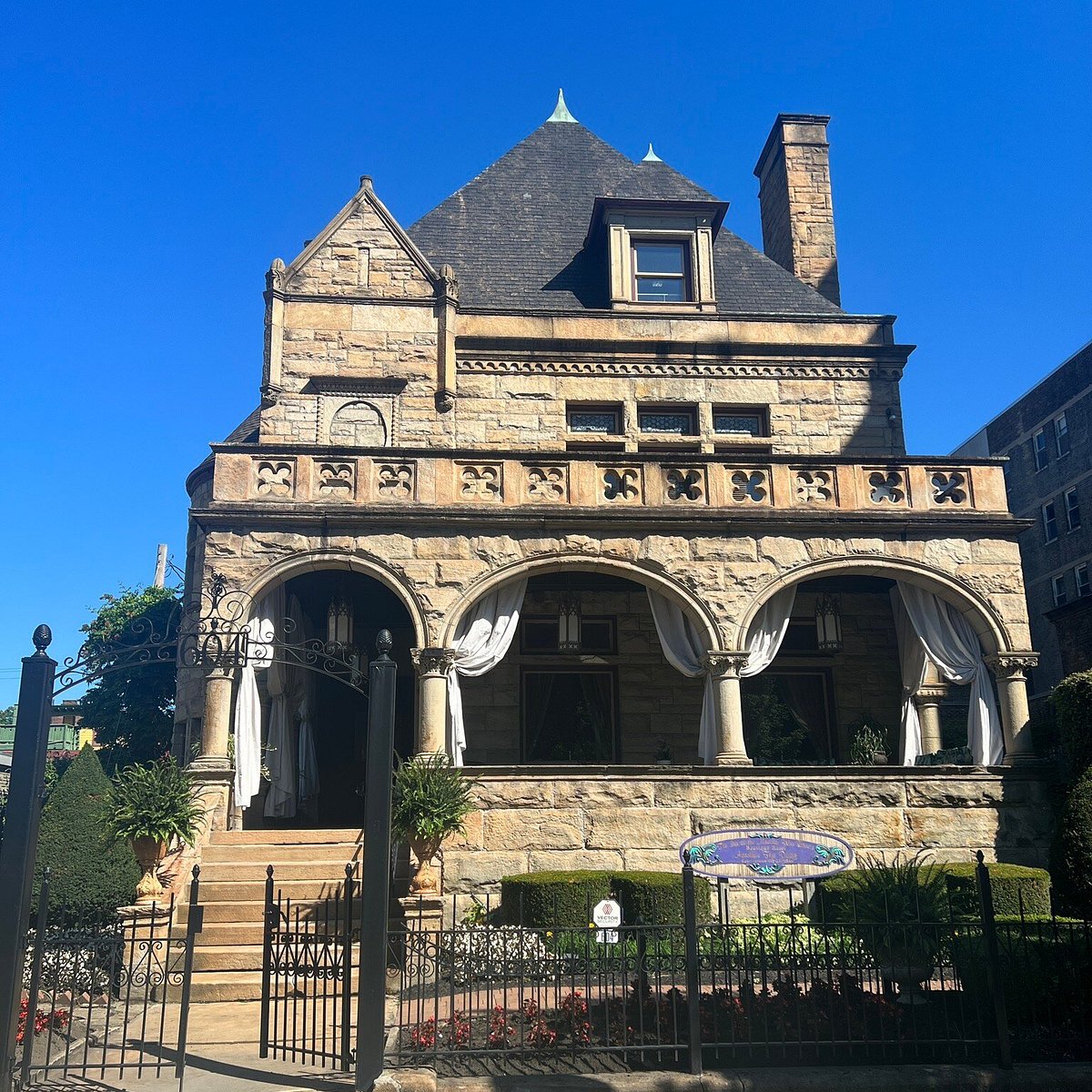
In the closing decades of the 19th century, Pittsburgh was booming. Industry, commerce, and banking had created a new class of wealthy citizens, and Russell H. Boggs was among them. As co-founder of Boggs & Buhl, a department store that became one of the most prominent on the city’s North Side, he built his fortune by catering to Pittsburgh’s growing middle and upper classes. Beyond retail, Boggs invested in transportation and real estate, helping to shape the development of the city and its suburbs. His success, like that of many of Pittsburgh’s industrial age figures, found expression in the home he chose to build.
In 1888, Boggs commissioned the construction of a residence on West North Avenue that came to be known as Boggs Mansion. Designed in the Richardsonian Romanesque style, the mansion embodied the architectural fashion of the era: heavy stone walls, rounded arches, and a fortress-like solidity balanced by ornate interior craftsmanship. Stained glass, carved woodwork, and distinctive stone fireplaces reflected both permanence and refinement. The home was more than shelter—it was a statement of place and status, and a setting where Boggs entertained Pittsburgh’s leading families.
After Boggs’s death in 1922, the mansion passed through different uses and ownership, including a period as a seminary. Decades of neglect eventually left the house in decline, its structure and details threatened by disrepair. By the end of the 20th century, however, the property was restored and stabilized, ensuring its survival as a landmark in the historic Mexican War Streets neighborhood.
Today, the Boggs Mansion stands as one of Pittsburgh’s most notable late-19th-century residences. It tells the story of a businessman whose career reflected the city’s growth, and of an architectural style that left a lasting mark on Pittsburgh’s built environment. More than a relic, it remains a reminder of the wealth, ambition, and craftsmanship that defined the city’s Gilded Age.